
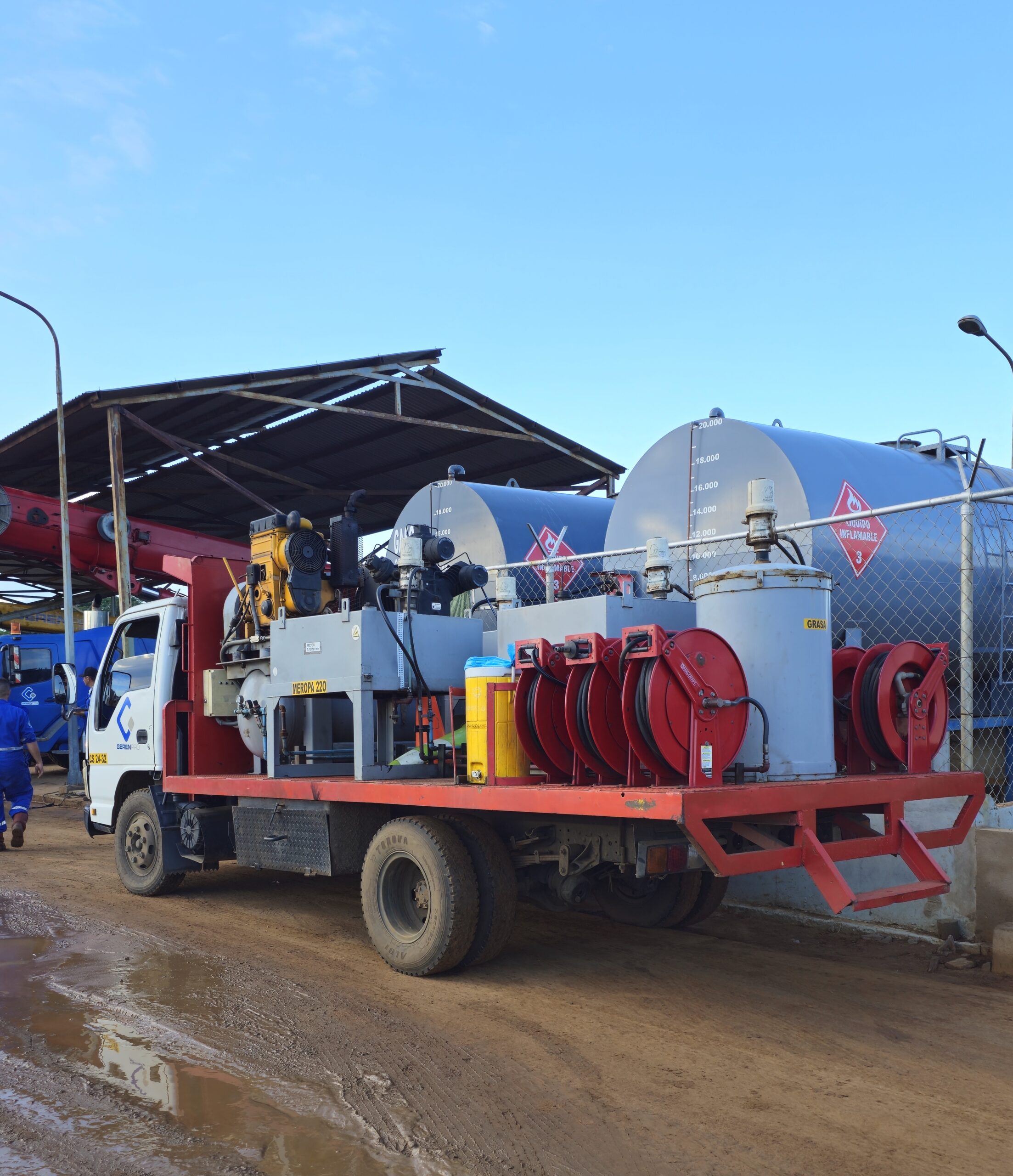
En mantenimiento petrolero hay trabajos que no justifican un proyecto grande, pero que tampoco se resuelven con “una cuadrilla y ya”. Ahí entran los servicios semipesados, que suelen incluir soldadura, hidrojet, camiones de trasegado y flota liviana.
La productividad en campo se pierde por lo mismo casi siempre: falta de coordinación con el sitio, alcances poco claros y logística improvisada. Esta guía resume cómo planificar y contratar estos servicios de forma más predecible, especialmente cuando las ventanas operativas son cortas.
Hydrojet: Useful When the Objective Is Clear
Hydrojet (high-pressure water cleaning) is used to:
- remove incrustations or industrial dirt,
- prepare surfaces before inspection or repair,
- enable subsequent work without delays.
The common mistake is requesting “hydrojet” without defining the objective. The right approach is to specify what you want to achieve: ready for inspection, ready for repair, or restoring an area's operational condition.
What to request for a proper quote:
- area or equipment to be serviced,
- current condition (if there is scale, mud, adhered material),
- access and restrictions,
- operational window.
Welding: time is gained before turning on the equipment
Welding in oil facilities usually requires coordination with operations and industrial safety. Typical delays come from:
- incomplete area clearance,
- permits not managed,
- interference with other activities,
- lack of preparation of the work front.
A well-planned service includes:
- area and access verification,
- coordination with the site manager,
- execution order (what goes first and what depends on what),
- closure with safe clearance.
Transfer trucks and light fleet: what keeps the plan from breaking
In the field, many time losses are not technical: they are logistical. Tool transfer, consumables, material removal, supervision and support mobility. A well-coordinated light fleet:
- reduces waiting time,
- improves site control,
- prevents key personnel from disconnecting from the work front.
In practical terms: logistics sustains continuity.
Coordination Checklist to Avoid Rework
Before executing, validate these points with the site and the provider:
- Work objective: what it enables or resolves
- Operational window: inicio y duración
- Who authorizes and who clears the area
- Access restrictions and industrial safety
- Acceptance criteria: how it will be confirmed that it was done properly
This avoids the typical scenario: “all set,” but the work doesn't start due to coordination.
What a Quotation Request Should Include
- Service: welding / hydrojet / logistics support
- Location and access
- Operational window
- Site requirements: induction, applicable permits
- Resources: required personnel and equipment
- Deliverable: closure, removal, area clearance, and basic execution record
Si tienes una intervención próxima y quieres validar recursos, coordinación y alcance, solicita una evaluación técnica.
Frequently Asked Questions
Why do these jobs get delayed if they are “simple”?
Because they depend on coordination: area clearance, permits, interference with other activities, and site logistics. Simple things get complicated when there is no order.
What should a good hydrojet scope include?
Exact area, final objective (for example, ready for inspection), access, restrictions, and operational window. Without that, the quote is usually incomplete.
What does the light fleet contribute to maintenance?
It provides continuity: reduces waiting, sustains resource transfer and maintains the pace of the work front.