
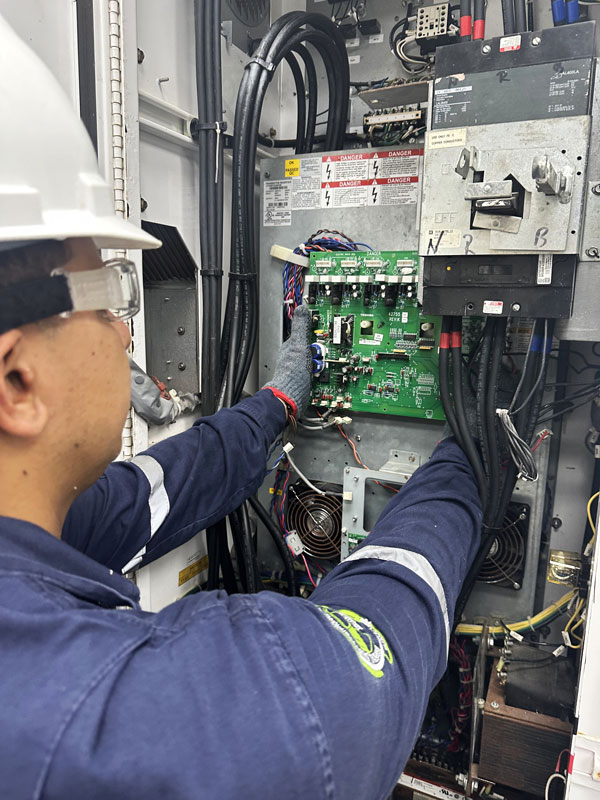
When a pump or critical system depends on a variable frequency drive, an electrical failure quickly becomes an operational continuity problem. The impact is not just technical: it affects production, planning, and response times.
In the field, internal classifications are usually handled (for example, BM, BCP, and BES according to client practices). But beyond the name, what matters is understanding what symptoms appear, what to check first, and what a supplier must deliver for the repair to be reliable.
What a Variable Frequency Drive Does and Why It Fails by “Dragging” the System
The variable frequency drive regulates motor speed and helps control flow or pressure. When it fails:
- the equipment stops or becomes unstable,
- alarms appear,
- maintenance is rescheduled,
- and sometimes the problem is confused with the motor, wiring, or power supply.
That's why a serious repair doesn't start by swapping boards: it starts by confirming the probable cause.
Typical Failure Signals (Most Common in Operation)
- Repetitive stops under load.
- Overcurrent or overtemperature alarms.
- Irregular speed variations.
- Cabinet overheating.
- Intermittent failures: "it restarts and fails again".
These signals don't always point to a single culprit. Many times the drive “protects itself” because something around it is out of condition.
Short Diagnostic Path (Before Replacing Parts)
1) Alimentación eléctrica y protecciones
Check connections, protections, grounding, and power supply behavior. A variation or bad connection can trigger recurring alarms.
2) Ventilación y condiciones ambientales
Temperature, cabinet ventilation, filters, dust accumulation, and fan condition. Overheating is a frequent cause of repeated failures.
3) Motor y carga mecánica
If the motor is strained, misaligned, or has insulation problems, the drive may trip on protection. Checking actual load and motor condition avoids incomplete repairs.
4) Parámetros y configuración
Ramp, limit, and protection settings. A poorly defined parameter can work “halfway” and fail when the load changes.
5) Integración con control y supervisión
If there is integration with automation or supervision, part of the problem may be in signals, wiring, or communication configuration.
What a Reliable Repair Should Include
A well-executed repair normally makes three things clear:
- What failed and why (explained without unnecessary technicalities).
- What was corrected (concrete actions).
- What is recommended to prevent recurrence (ventilation, cleaning, parameters, motor or power supply review).
This reduces the probability of repeating the failure weeks later.
What to Request in a Quotation
- Drive model or reference (if available)
- Symptoms and frequency of the failure
- Operating conditions (load, environment, hours)
- Whether it is critical production equipment (yes/no)
- Available operational window
- Deliverables: diagnosis, functional verification, and recommendations
Si tienes fallas recurrentes y necesitas diagnóstico y recuperación en campo, solicita una evaluación técnica.
Frequently Asked Questions
Is the problem always the drive when there is an alarm?
Not necessarily. It could be the power supply, ventilation, motor, or mechanical load. That's why the diagnosis must review the complete system, not just the equipment.
What makes a repair “real” and not a patch?
That it includes probable cause, verifiable correction, and a recommendation to prevent recurrence. If it only “resets and works,” the failure will likely return.
Why does cabinet ventilation matter so much?
Because overheating triggers protections and degrades components. Poor ventilation can cause intermittent failures that are very difficult to trace.